David Drake
Poet, Potter, Typesetter, Freedman
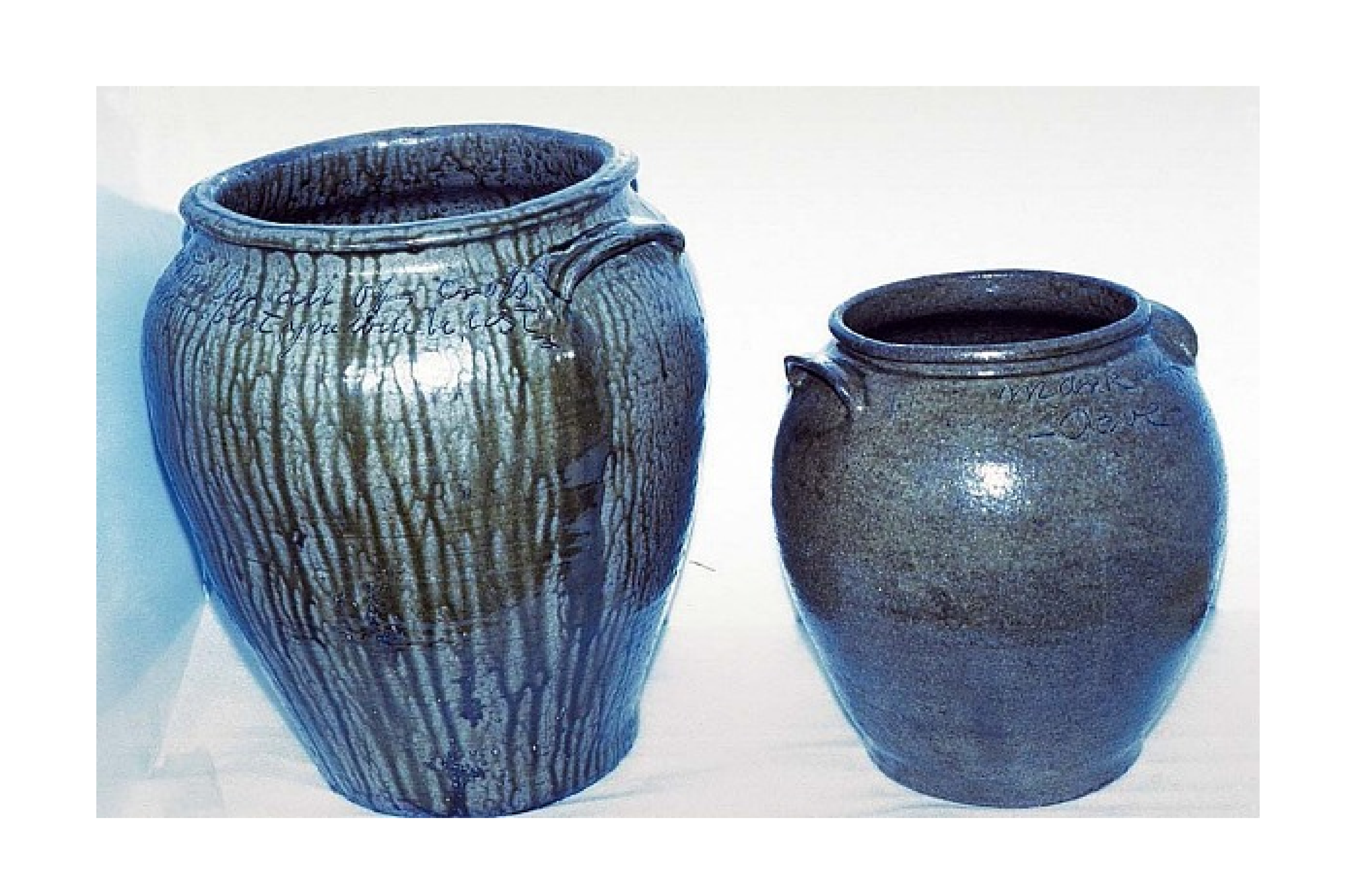
David Drake Jars Credit: Smithsonian Museum
I made this Jar.
Large stoneware jar by David Drake, an enslaved Black master potter working on a plantation in the Edgefield District of South Carolina. Dave is the only known enslaved potter to sign and date his work, an act of defiance in the State of North Carolina where his literacy was considered illegal. The enscription says: “I made this jar all of cross, If you don[’]t repent you will be lost,” “May 3, 1862/ LM Dave.”
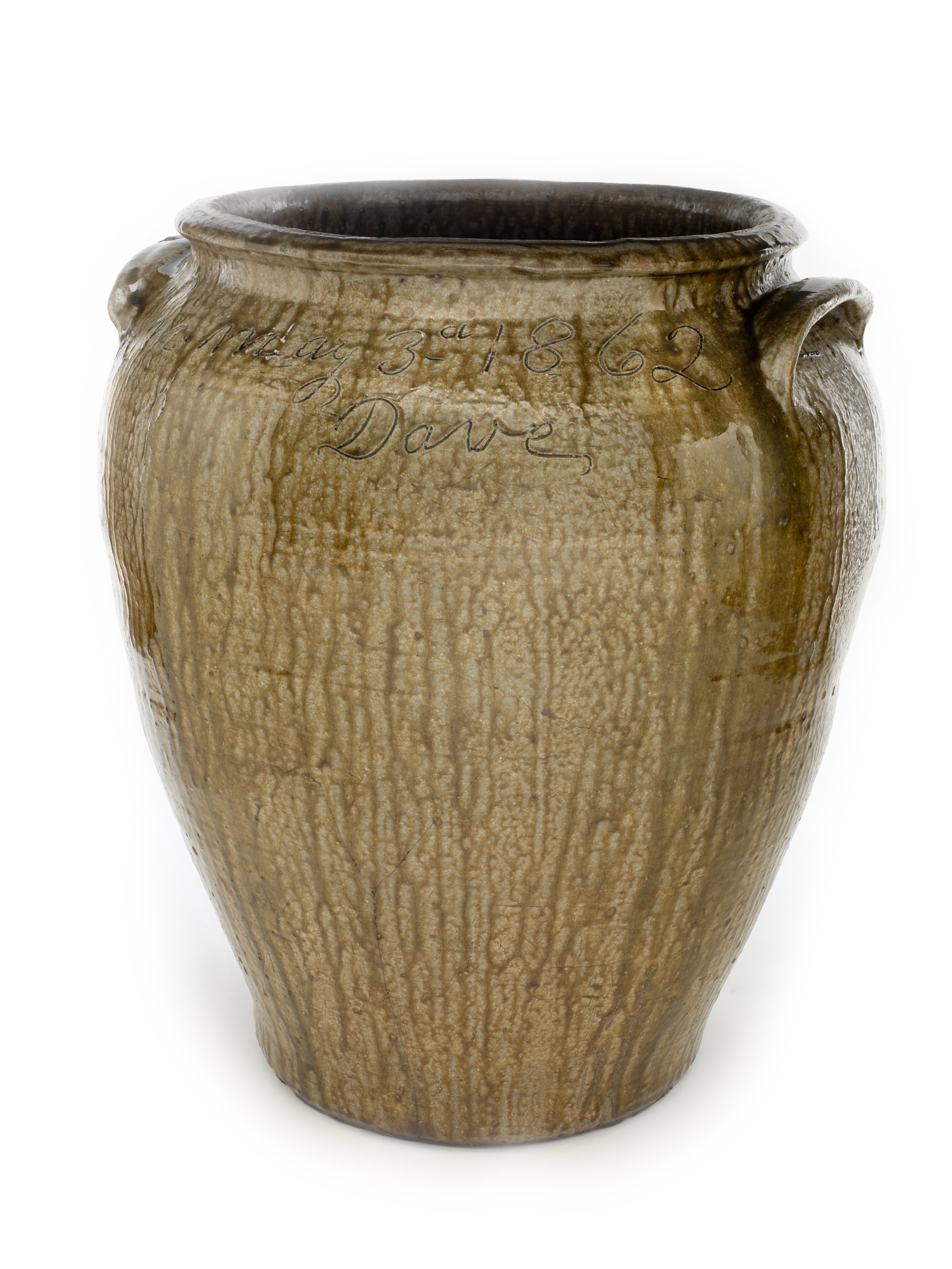
Large alkaline-glazed stoneware jar, made in 1862 by David Drake, Credit Smithsonian Museum
Historians think this may be a reference to the Peter’s speech at Pentecost from the Bible or it may be a combination of Dave’s feelings about both religion and slavery. ‘About twenty surviving Dave pieces are inscribed with Dave’s original two line poems—wonderful and sometimes cryptic ruminations on topics as diverse as pots, love, money, spirituality, life as a slave, and the afterlife. (source)’ This Jar is currently in the collection of the Smithsonian but significantly, the Boston Museum of Fine Art has restored two David Drake jars to his family with a buy-back agreement based on frameworks used for Nazi-looted property during WWII. This is the first time the MFA has resolved an ownership claim for works taken under the conditions of slavery in the U.S. Their agreement with the Drake family acknowledges that his work was wrongfully taken when he was denied the right to the value of his labor. Hopefully this formal recognition can act as a model to preserve the legacy of artists and restore items to the rightful owners rather than profiting off the continued animosity and exploitation of slavery.
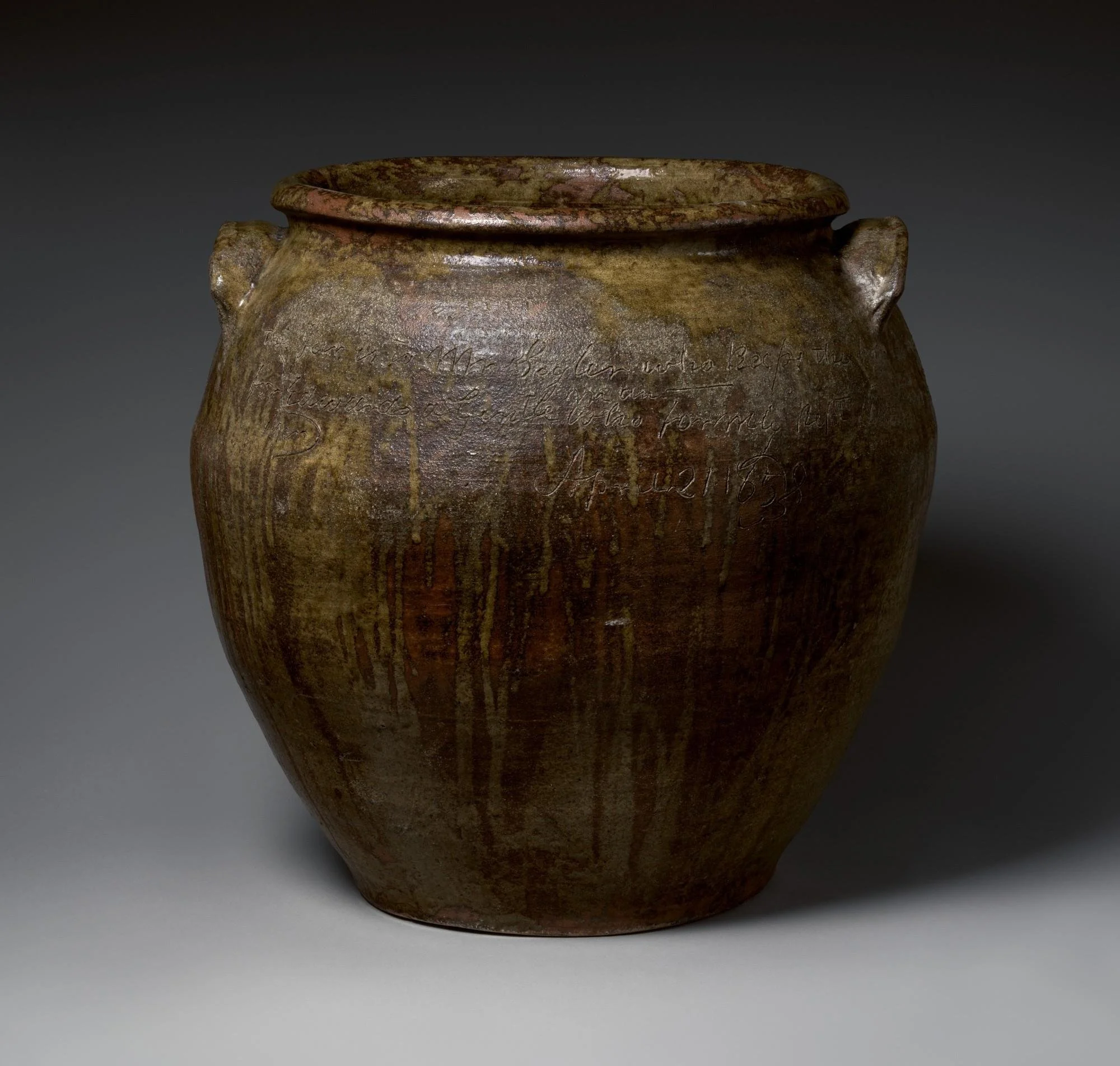
The Metropolitan Museum of Art, New York
Boston MFA Statement: “We are pleased to reach this landmark resolution with the family of David Drake,” said Pierre Terjanian, Ann and Graham Gund Director. “His works tell important stories. We acquired two jars by him to share his accomplishments as a talented artist, and to also call attention to the conditions of slavery under which he lived and worked. We are honored to be able to continue to share Drake’s creativity and story with our visitors and to preserve his legacy for future generations with support from his family.”
“Both jars were made in 1857 at the Stony Bluff Manufactory in Edgefield and would have been sold to benefit Drake’s enslaver, Lewis J. Miles. Drake was not permitted to possess the jars and did not receive remuneration for them or exercise any control over their fate. He signed both vessels and dated the “Poem Jar” August 22, 1857 and the “Signed Jar” September 22, 1857. Drake inscribed the “Poem Jar” with a rhymed couplet: “I made this Jar = for cash/Though its called Lucre trash.” With these lines, he announced his role as maker and challenged those that undervalued his labor. The poem is almost certainly ironic, pointing to the enslaver’s gain at Drake’s expense, as “lucre” refers to money or profit, often gained through sordid or dishonorable means. (Source)
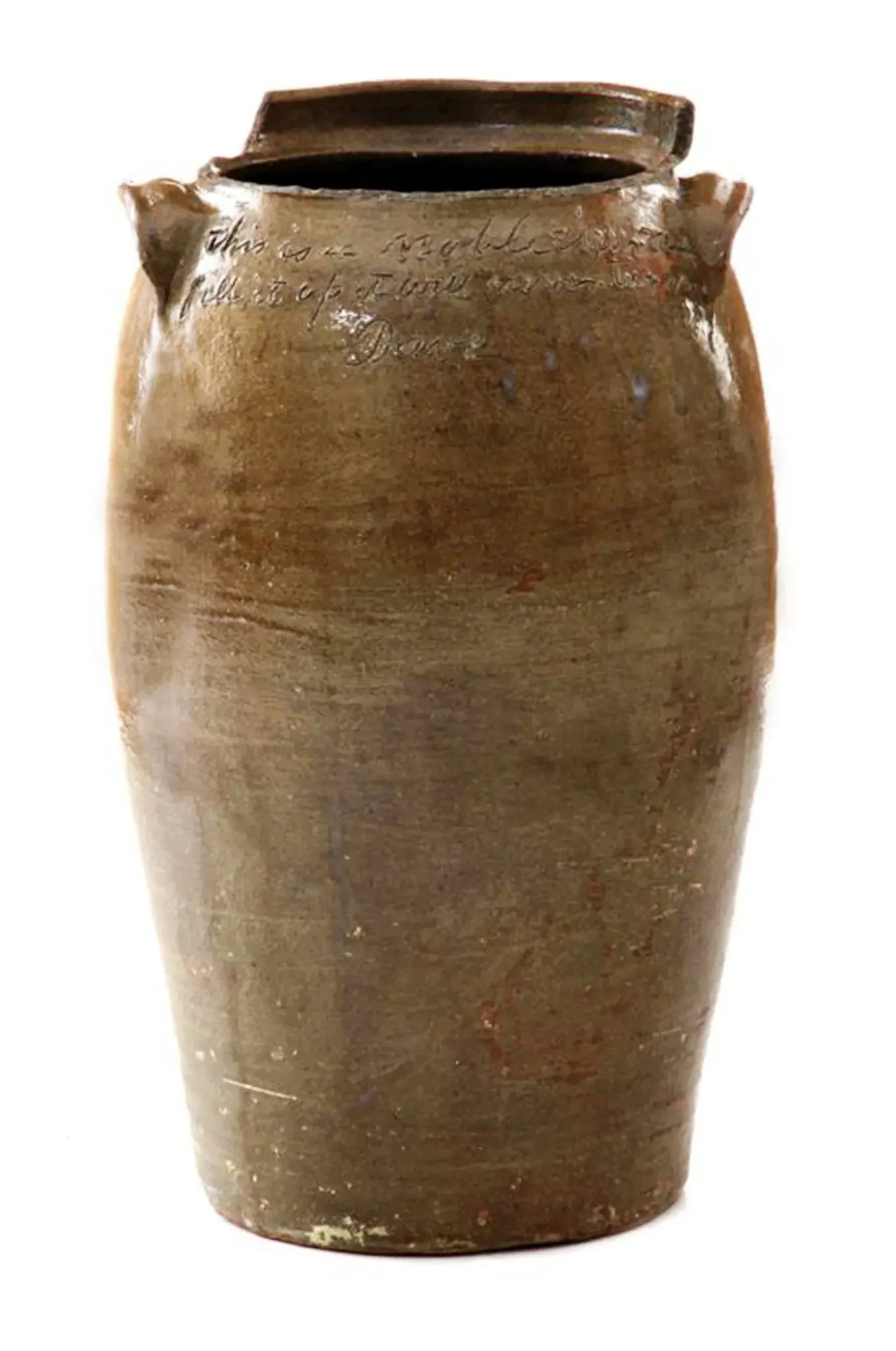
An 1858 stoneware churn inscribed by David Drake, Credit Charlton Hall Galleries